
Your face is part of your body, so it makes sense you should be able to use body lotion on your face, right? Technically you can, but it may not always be what’s best for your skin’s needs. Read on to learn more about the differences between face lotions and body lotions and how to determine if and when to use a body lotion on your face.
The importance of moisturizing your face and body
Keeping your skin moisturized is important in order to keep your skin looking healthy and feeling smooth and supple. When skin becomes dry, it can not only feel uncomfortable, but it can lead to other issues like flaking, cracking, and looking dull or irritated. When it comes to dry skin, prevention is important, so keeping on top of it with a nourishing daily moisturizer is key. But is one body lotion product sufficient to use head-to-toe, or should you choose a separate facial moisturizer?
Differences between body skin and facial skin
In order to understand why body and face lotions may be different, it’s important to understand the differences between the skin on your face and the rest of the body. Your skin’s needs are unique to you. You may be more prone to dry skin or oily skin, or perhaps you’ve inherited your parents’ sensitive skin. In addition to your overall skin type, you may experience different concerns with the skin on your face vs. the skin on your body.
How is facial skin different from the rest of the body?
- Thickness - The surface layer of the skin on your face is thinner and more delicate than the skin on some other parts of your body1.
- Ability to retain moisture - The skin’s moisture barrier on the face does not function as well as other areas of the body1, which can leave skin on areas of the face prone to dryness.
- The delicate eye area - The face also encompasses the eyelid area which is the thinnest skin on the entire body2. This delicate area tends to show early signs of aging like crow’s feet, so you’ll often see skincare products specifically catered to the eye area.
- Porousness - The skin on the face is covered in a high concentration of hair follicles (pores) compared to some other areas of the body. Some areas, such as the lips, palms of the hands, and soles of the feet don’t have any.
- Oiliness - Facial skin contains a high concentration of sebaceous glands. This, combined with its high concentration of pores, can lead to an oily complexion if sebaceous glands are over-active. This can sometimes then lead to clogged pores, which some facial skincare products are formulated to address.
- Exposure - The face is exposed to the elements year-round, leaving it vulnerable to the effects of the sun, wind, extreme weather, and other environmental stressors.
Body lotion vs. face lotion – key differences
The differences between body lotions and face lotions will depend on the specific product and how it’s formulated. When you browse skincare products, look for indicators on the packaging that specify the area(s) of the body they’re designed for.
Here are some common ways that body lotions and face lotions may differ:
Formula
Depending on where on the body a moisturizing lotion is meant to be applied, it may impact the formula. Facial moisturizers are specially formulated for use on the delicate skin on the face and often contain ingredients that specifically cater to facial skin concerns, whereas body lotion formulas may have stronger exfoliants or heavier moisturizers that might be too overwhelming to use on the face3. Body lotions may also be formulated to target particularly rough or dry skin that commonly appears on areas like the hands, feet, and elbows.
Texture
Body lotions typically have a higher water content in their formula than creams or ointments and are designed to be easily applied and smoothed onto large areas of skin. You may find that products specifically made for the face are often formulated as a skin cream instead of a lotion, with a thicker, richer formula that contains nourishing oils3. Alternatively, you may find oil-free face creams and lotions for oily skin, and thicker body creams for intense moisturization. The water/oil content will come down to the specific product you’re using.
Sun protection
Since the face is one of the most exposed areas of the body, proper daily sun protection is essential. It’s not uncommon to see face lotions and creams with built-in broad-spectrum SPF to help protect the skin from sun exposure3.
Targeting particular skin concerns
Due to the high concentration of pores and more delicate nature of facial skin, and the fact that early signs of aging show on the face, face lotions will often contain ingredients and formulas designed to address specific facial skin concerns like oiliness, breakouts, or skin elasticity/wrinkles.
Can you use body lotion on your face?
You can technically use body lotion on your face, but the question is, should you? In most cases, unless a product specifies that it’s formulated for use on both the face and body, it’s best to choose a separate body lotion and face cream.
What will happen if I use body lotion on my face?
The effects of using a body lotion on your face will depend on your skin and the product you’ve used. Here are just a few potential scenarios that could occur if you use body lotion on your face:
- If you have oily skin on your face and use a thick, oil-rich body cream on your face, you could exacerbate your skin’s oiliness that could lead to clogged pores and potential breakouts.
- Using an exfoliating body lotion could cause irritation to your facial skin.
- If you have a skin condition like eczema, using a body lotion not suitable for eczema on the face could cause further irritation.
- If you have sensitive skin on your face, using a heavily fragranced or non-hypoallergenic body lotion on your face could cause irritation4.
When can I use a body lotion on my face?
In some instances, you will see lotions that are appropriate for both body and face with wording like “all-over lotion” or “lotion for face and body”. In these cases, you may be able to apply the product to both your face and your body provided that it’s appropriate for your skin type and your skin’s needs.
If you have concerns about your skin and what body lotions may be appropriate to use on your face, be sure to contact a dermatologist for further guidance.
All-over daily moisture - Aquaphor skincare products that can be used on both face and body
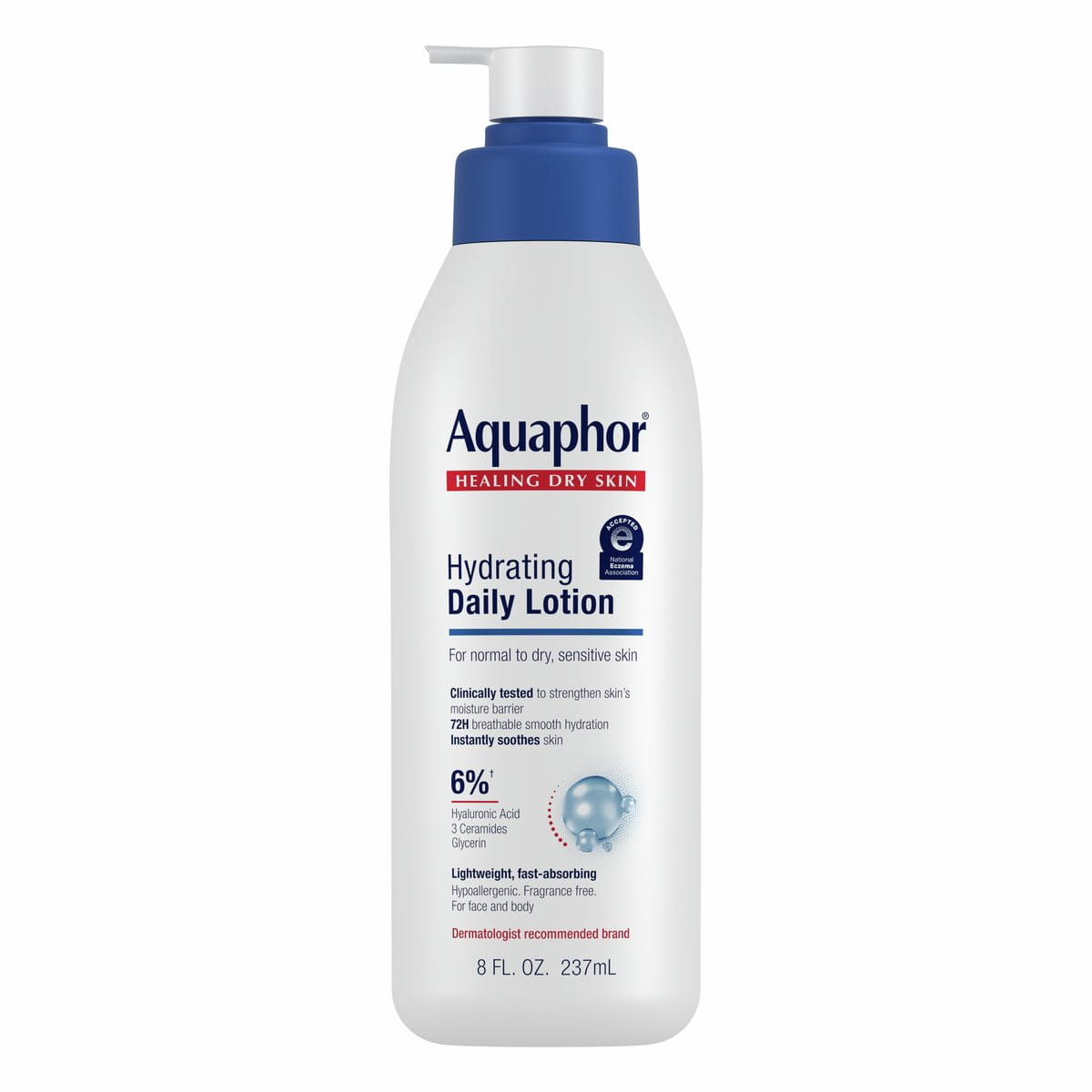
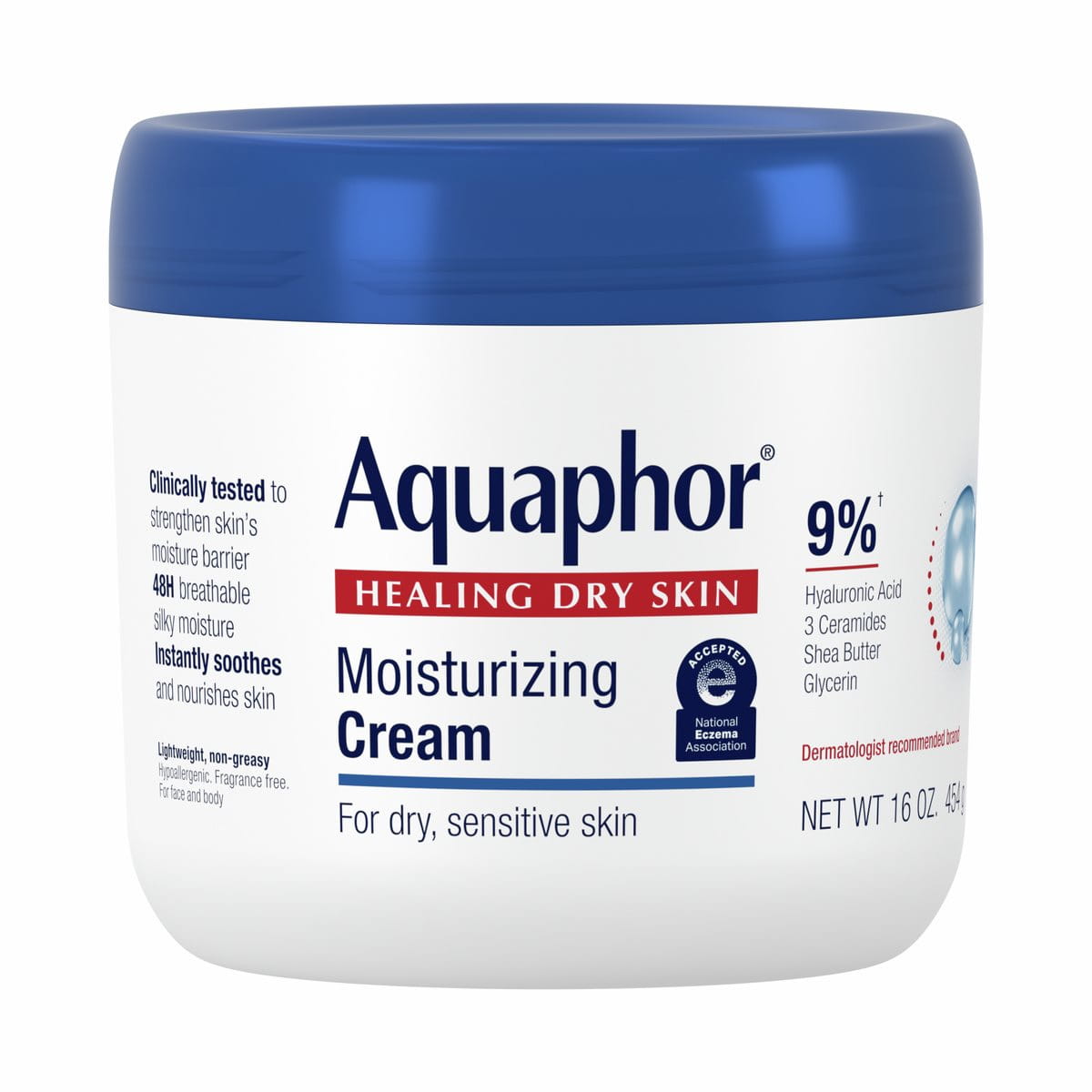
Take the risk out of experimenting with body lotions on your face and choose an all-over moisturizing product that’s been dermatologically tested for use on the face and the body. Aquaphor® offers two new moisturizers you can apply to the face and the body in hypoallergenic, fragrance-free, non-comedogenic formulas that won’t clog pores and will help support healthy-looking skin. Choose from a lightweight daily lotion and a richer nourishing cream to suit your preferences.
Lightweight daily moisture in lotion you can use on your body and face
For daily moisture and skin nourishment for both face and body, Aquaphor® Hydrating Daily Lotion provides 72-hour hydration to dry, sensitive skin. With a lightweight, fast-absorbing formula, this daily moisturizer brings the comfort and soothing properties of Aquaphor® to a product you can introduce into your morning and evening skincare routines. Hypoallergenic and non-comedogenic, fragrance-, dye-, and paraben-free, this nourishing moisturizer is suitable for sensitive skin, supports the skin moisture barrier and instantly soothes for soft, healthy-looking skin. Aquaphor® Hydrating Daily Lotion is accepted by the National Eczema Association.
Moisturizing cream for body and face that feels rich going on but maintains a lightweight texture
Aquaphor® Moisturizing Cream delivers 48-hour hydration to dry, sensitive skin in a richer, silky, creamy formula that still maintains a lightweight, non-greasy texture. This fragrance-free, hypoallergenic moisturizing cream instantly soothes, is suitable for sensitive skin, and supports the skin’s moisture barrier for long-lasting hydration and nourishment.
This product is also accepted by the National Eczema Association and has been tested with dermatologists.

Sources
- Tagami, H. Location-Related Differences in Structure and Function of the Stratum Corneum with Special Emphasis on Those of the Facial Skin. International Journal of Cosmetic Science 2008, 30 (6), 413–434. https://doi.org/10.1111/j.1468-2494.2008.00459.x.
- Cochran, M. L.; Lopez, M. J.; Czyz, C. N. Anatomy, Head and Neck, Eyelid. PubMed. https://www.ncbi.nlm.nih.gov/books/NBK482304/.
- Marie, S. Sure, You Can Put Body Lotion on Your Face — But Should You Make It a Habit? Healthline. https://www.healthline.com/health/beauty-skin-care/lotion-on-face.
- Duarte, I.; Silveira, J. E. P. S.; Hafner, M. de F. S.; Toyota, R.; Pedroso, D. M. M. Sensitive Skin: Review of an Ascending Concept. Anais Brasileiros de Dermatologia 2017, 92 (4), 521–525. https://doi.org/10.1590/abd1806-4841.201756111.
The information provided herein is not intended to be medical advice. Nor is it intended to treat the underlying skin disease or condition. The information is provided solely to:
- Moisturize, soften and smooth dry skin.
- Improve the appearance of the skin.
- Achieve healthier-looking skin.