Understanding ingredients and the difference between occlusives, humectants, and emollients can help you choose moisturizing steps that make sense for you. In this guide, you’ll learn what an occlusive is, how it works, how it compares to humectants and emollients, and where it fits in your routine.
Introduction to occlusives
What does “occlusive” mean?
How occlusives help prevent moisture loss
Is Aquaphor Healing Ointment® considered an occlusive?
Occlusives are commonly found in richer textures, like ointments, because ointments sit on top of the skin and help hold moisture in place4.
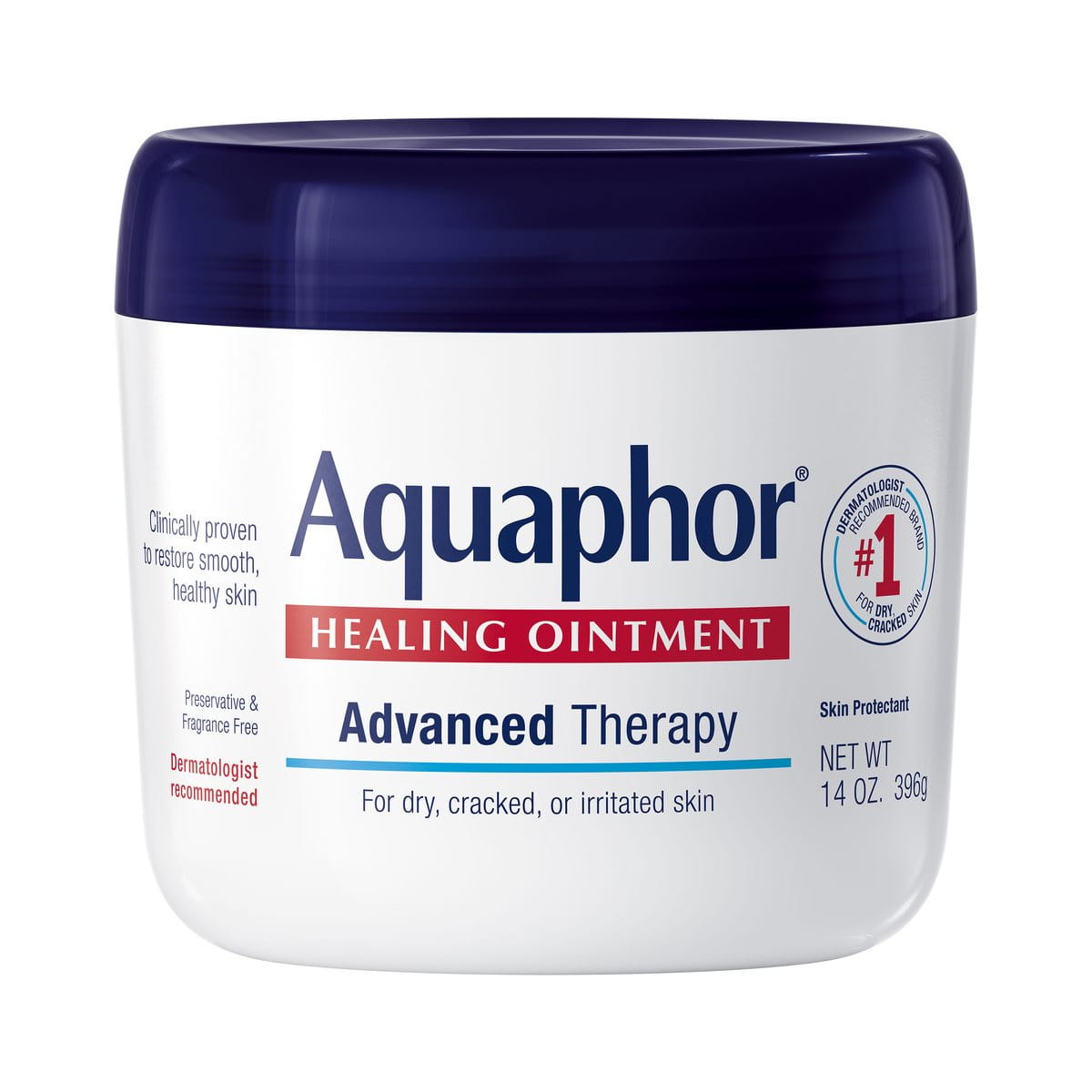
Aquaphor Healing Ointment® is unique in that it is a moisturizer containing powerful humectants and it forms a semi-occlusive barrier on the skin. As a whole, the formula helps to protect skin and retain moisture by forming a protective barrier, while also allowing excess moisture to escape and oxygen to flow in. Aquaphor Healing Ointment®’s formula also offers effective moisturizing properties that help attract and maintain hydration in the skin. By creating a semi-occlusive barrier on the skin that allows the outflow of excess fluid and the inflow of oxygen, it allows skin to ‘breathe’ and helps to create an ideal healing environment for the skin.
Benefits of occlusives in skincare
When occlusives can be helpful
Occlusive skincare can be especially helpful when:
- Skin feels dry, tight, or uncomfortable from dryness5.
- Skin looks flaky or feels rough from dryness.
- The weather is cold or windy6.
- Indoor heat or low humidity makes skin feel drier than usual.
- You are washing your hands frequently6.
What occlusives can help support
- Moisture retention: Helps slow moisture loss, so your skin can stay hydrated longer.
- Skin comfort: Supports a comfortable feeling when your skin is very dry.
- Protection from dryness: Helps protect areas from dryness that may tend to dry out easily.
Occlusive vs. humectant vs. emollient : What’s the difference?
Humectants
Humectant skincare contains ingredients that attract and bind water to help support skin hydration7. Humectants often feel lightweight or serum-like.
Best for: Skin that feels dehydrated or tight from dryness, especially in dry indoor environments.
Helpful note: The moisturizing effect of humectants can be amplified by use of a product that also includes an occlusive, helping reduce the amount of water escaping from the skin. This is why humectants are often paired with an occlusive step.
Emollients
Emollients help soften and smooth the feel of skin by improving how the skin surface feels, especially when it feels rough. Emollients are often described as ingredients that help fill in and smooth the surface8. They often feel creamy, cushioning, and smoothing.
You will commonly find emollients in creams and lotions, which are designed to feel comfortable and spread easily.
Best for: Rough-feeling skin that needs softness and comfort.
Helpful note: Emollients are often used before an occlusive step to help address skin’s texture first, and then provide a protective layer to keep moisture retained.
A simple way to remember the difference between occlusives, humectants, and emollients
Humectants: draw moisture to the skin
Emollients: smooth and soften the feeling of your skin
Occlusives: help protect skin from dryness and help keep moisture from leaving too quickly
How to layer occlusives, humectants, and emollients in your skincare routine
The basic layering order for humectants, emollients, and occlusives
The following is simple skincare routine incorporating humectants, emollients, and occlusives8:
- Cleanse with a gentle cleanser.
- Hydrate with a humectant-based step, such as a hydrating serum.
- Moisturize with a lotion or cream.
- Protect with an occlusive layer where needed. Aquaphor Healing Ointment® can be used as this final step, especially on areas that feel extra dry.
As with any skincare routine, you will want to be sure to select products that cater to your skin’s unique needs. If you have further concerns about your skin, be sure to consult with a dermatologist before starting a new skincare regimen.
Other ways to use Aquaphor Healing Ointment® as an occlusive step
Overnight lip care
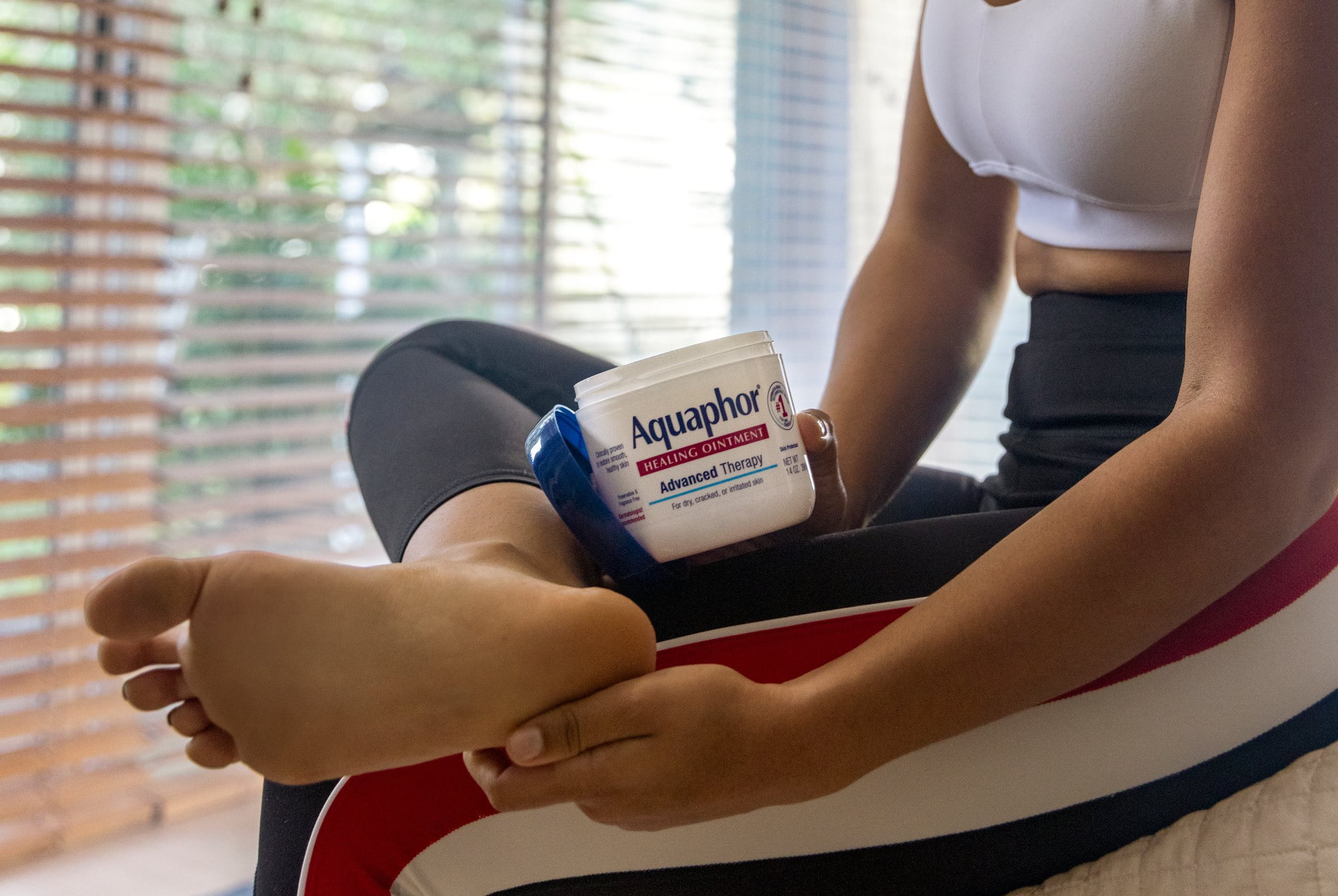
On dry, cracked heels and feet
Around the nose during cold, dry seasons
Common questions about occlusives
Are occlusives the same as moisturizers?
An occlusive is a type of moisturizing ingredient. Many moisturizers combine humectants, emollients, and occlusives to support hydration, comfort, and moisture retention.
Can I use an occlusive every day?
Many people use occlusive skincare daily on areas that are frequently dry, especially in colder months. You can also use occlusives only when needed, such as after handwashing or at night. Look for products that are noncomedogenic, like Aquaphor Healing Ointment®, to help soothe and protect skin without clogging pores.
Do occlusives work better over moisturizer?
Because occlusives help to create a protective barrier on the skin, they are typically most helpful after a hydrating or moisturizing step.
Should I use an occlusive all over or only on certain areas?
It depends on how your skin feels and the texture you prefer. Many people use occlusives as a targeted final step on areas that tend to dry out quickly, like hands, lips, elbows, knees, or heels. If you are using it on larger areas, start with a thin layer and adjust based on comfort.
Recap of how Aquaphor Healing Ointment® can fit in your routine
Aquaphor Healing Ointment®can be a simple, flexible semi-occlusive step for everyday dryness support. Apply it as needed anywhere skin is feeling dry to help retain moisture in the skin, or as overnight moisture support on targeted areas that are prone to dryness.
The information provided herein is not intended to be medical advice. Nor is it intended to treat the underlying skin disease or condition. The information is provided solely to:
1. Moisturize, soften, and smooth dry skin
2. Improve the appearance of the skin
3. Achieve healthier-looking skin
Sources
- Exploring Ingredients – Occlusives & Emollients. Center for Research on Ingredient Safety.
https://cris.msu.edu/news/exploring-ingredients/exploring-ingredients-occlusives-emollients/. - Hamed Hamishehkar; Saeideh Same; Khosro Adibkia; Zarza, K.; Javad Shokri; Mehran Taghaee; Kouhsoltani, M. A Comparative Histological Study on the Skin Occlusion Performance of a Cream Made of Solid Lipid Nanoparticles and Vaseline. Research in Pharmaceutical Sciences 2015, 10 (5), 378.
-
Purnamawati, S.; Indrastuti, N.; Danarti, R.; Saefudin, T. The Role of Moisturizers in Addressing Various Kinds of Dermatitis: A Review. Clinical Medicine & Research 2017, 15 (3-4), 75–87.
https://doi.org/10.3121/cmr.2017.1363. -
Vaseline on Your Face: What to Know, How to Use It, Pros & Cons. Healthline.
https://www.healthline.com/health/vaseline-on-face. -
Clinic, C. Emollients are ingredients in creams, lotions or ointments that form a film on your skin. Emollients soothe and treat dry skin, irritation, eczema and psoriasis. Cleveland Clinic.
https://my.clevelandclinic.org/health/treatments/23305-emollients. -
Why Moisturizing Doesn’t Always Prevent Dry Skin. Healthline.
https://www.healthline.com/health/why-is-my-skin-so-dry-even-when-i-moisturize. -
Exploring humectants. Center for Research on Ingredient Safety.
https://cris.msu.edu/news/cosmetics/exploring-humectants/. -
DermNet. Emollients and moisturisers | DermNet NZ. dermnetnz.org.
https://dermnetnz.org/topics/emollients-and-moisturisers.