Getting bitten or stung by a mosquito, spider, ant, or other insect can ruin an otherwise fun time outdoors. Thankfully, you don’t have to suffer until the bug bite goes away to get some itch relief. Read on to learn more about why bug bites itch, how to help prevent them, and how to soothe itchy skin from insect bites with Aquaphor®.
Why do mosquito bites and other bug bites and stings itch so much?
When a bug bites or stings you, your body responds with an allergic reaction to the venom from the bug. This allergic reaction causes a release of histamine in the body which makes the itching sensation1. Most itchy bug bites, while uncomfortable and distracting, are harmless and will eventually go away, but if you have a severe allergic reaction or are bitten or stung by an insect with dangerous venom, you will want to seek prompt medical attention.
What attracts mosquitoes?
Some people feel like they’re a mosquito magnet compared to others, and it is possible that you may be more at risk of attracting mosquitoes depending on your body chemistry. Factors that contribute to attracting mosquitoes include2:
- Heat
Mosquitoes love warm environments, so if you’re feeling overheated or sweaty, you may be sending a signal to mosquitoes that their next meal is near - Certain colors
Studies have shown mosquitoes are more attracted to red, orange, black, and cyan, so if you’re wearing these colors, you may be at higher risk for mosquito bites. - Sweat
Certain chemicals found in sweat attract mosquitoes, such as ammonia and uric acid. - Fragrance
Scented body products, particularly scents that smell like flowers, can make you very appealing to mosquitoes. - Lactic Acid
Found in sweat and in some moisturizing skincare products, lactic acid can attract mosquitoes. - Carbon Dioxide
Mosquitoes are drawn to carbon dioxide which is exhaled when you breathe.
How to tell if it’s an insect bite or something else
Different bug bites take on different appearances, with some, like mosquito bites, showing up as a singular itchy welt, and others, like fire ant bites or flea bites, showing up as a cluster3. You may find clusters of bug bites on your ankles or other areas in contact with grass if you’ve been taking a woodsy walk, or you may find fly bites or other bug bites along your hairline.
If you’re unsure of what is causing itchiness on your skin, if you have a red bullseye rash (a potential sign of Lyme disease from a tick bite4), or if you may have been around irritating plants like poison ivy or stinging nettle, be sure to contact a healthcare professional for a proper diagnosis.
Common bug bite symptoms
Here are some common signs and symptoms that accompany bug bites1:
Itchy skin
Perhaps the most obvious and distracting symptom of insect bites is incessant itching. Most of us know the feeling of accidentally brushing up against an area of skin with an unknown mosquito bite and feeling the itch that gets set off afterward. If you have sudden and extremely itchy skin in one spot, you may have a bug bite. Certain bug bites may also sting or cause a mild burning feeling after the initial discomfort of the sting or bite itself.
A bump or welt on the skin, either by itself or in a cluster
Since our bodies respond with a mild allergic reaction at the site of a bug bite, it’s common to have a raised area at the site of the bite that may also have redness surrounding it. Mosquito bites will show up as isolated bumps, and other insect bites like flea bites, fly bites, or ant bites may more commonly show up as a cluster3.
Minor swelling around the bite
Some mild puffiness around the bite is common and a sign that the body is responding to the insect bite. If you have severe swelling that spreads or feels hot to the touch or is accompanied by more severe symptoms of an allergic reaction like wheezing, numbness, widespread swelling (over 4-inch radius), vomiting, headache, or muscle stiffness or pain, be sure to contact an emergency health provider right away as you may be having a severe or allergic reaction1.
6 Common activities where you might get itchy bug bites or stings
Any time you’re spending time outdoors, you’re risking encountering insects, but there are some scenarios where insect bite risk is higher than others:
1. Camping
Spending time in the woods or near bodies of water increases your risk of insect bites1, and camping often combines both environments.
2. Hiking
Hiking in forested areas, tall grasses, or near wetlands puts you at elevated risk for bug bites.
3. Being near a lake, pond, marsh, or other body of water
Certain insects love to be near standing water, so you may find yourself swatting away mosquitoes and other biting insects when you’re spending time at a lake, marsh, or other wetland area5.
4. Going to the beach
While the sea breeze may help keep certain bugs like mosquitoes away, you may encounter other biting insects such as spiders, biting horseflies or ‘greenheads'6.
5. Taking an evening walk
Certain species of mosquitoes are more likely to bite at night7.
6. Being around animals or visiting a farm
If you’re around livestock, wild animals, or even cats and dogs1, you run the risk of encountering biting insects like fleas and flies
Relieving the itch - how do you stop insect bites from itching?
Having an itchy bug bite can be incredibly distracting and uncomfortable, and it can often feel like the more you scratch, the itchier it gets. Here are some ways to help soothe the itching from bug bites to help you get your mind off of it and to help give your skin a chance to heal.
Don’t scratch
While it’s so tempting to scratch a bug bite because of how itchy it is, try to resist the urge. Scratching can not only cause your skin to react further and make the itching worse, it can also introduce the possibility of infection if you scratch so much that you break the skin8.
Clean the area
Inspect the area of the bug bite to make sure that there isn’t anything in your skin like a stinger, dirt and debris, or, in the case of ticks, the bug itself. In the case of tick bites, you will need to use caution in removing the tick and seek medical advice if necessary. Once you’ve confirmed the bite doesn’t have anything in it, gently wash the area with soap and water to help reduce infection risk1.
Apply a cold compress for 10 minutes
For itchy bug bites like mosquito bites, the CDC recommends applying an ice pack to the area for 10 minutes to help reduce initial itching and swelling9. You can repeat this as needed to help alleviate discomfort.
Elevate the area if the bite is on an extremity
If you’ve been bitten on an arm or leg, keep the area elevated to help reduce swelling10.
Apply an effective anti-itch ointment or cream
One of the most effective ways to find relief from the uncomfortable itching of insect bites is to use an over-the-counter anti-itch cream or ointment specially formulated to help stop itching from bug bites.
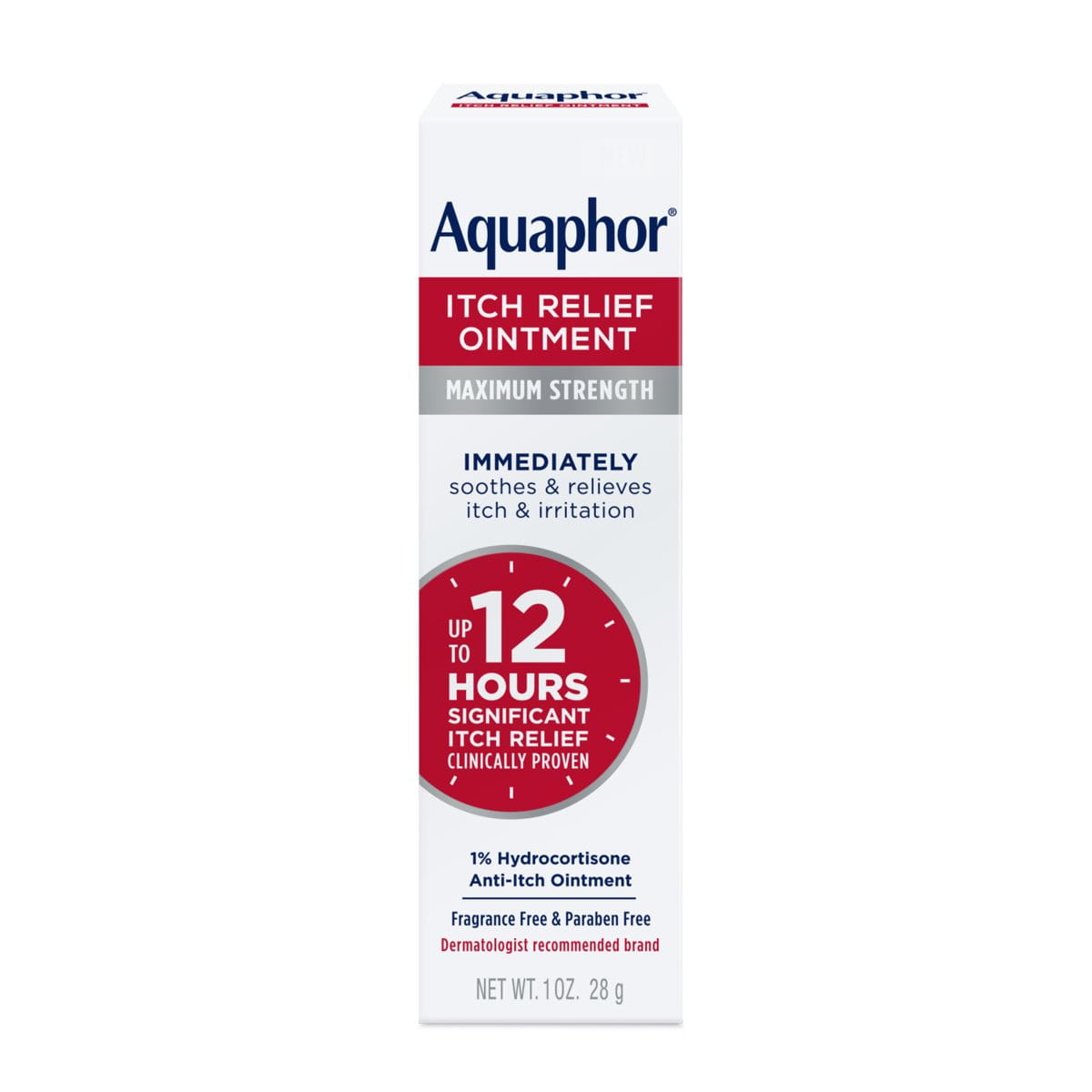
Aquaphor® Itch Relief Ointment formulated with 1% Hydrocortisone (anti-itch ointment) is clinically proven to deliver up to 12 hours of significant itch relief. Fragrance-free, paraben-free, and hypoallergenic, this itch relief ointment is gentle on irritated and itchy skin while offering maximum strength relief. Perfect for use on itchy bug bites, Aquaphor® Itch Relief Ointment soothes and relieves itch and irritation from both indoor and outdoor causes including eczema flares, bug bites, psoriasis, skin rashes, and poison ivy. Apply to the affected area a maximum of 3-4 times a day. This product is safe for children over 2.
Are mosquito bites and other common bug bites dangerous?
While most mosquito bites are benign, mosquitoes, ticks, fleas, and other bugs can carry serious diseases like malaria, Zika, yellow fever, Lyme, and more11. This, in addition to not wanting to be itchy, is a major reason why it’s important to take precautions to prevent bug bites whenever possible.
How to help prevent bug bites
While it’s impossible to completely avoid insects, there are some precautions you can take to help minimize your risk of getting an itchy bug bite, whether indoors or outdoors2:
1. Cover exposed skin
The best way to keep an insect from biting you is to make it impossible for it to get to your skin. Cover as much exposed skin as you can when you’re outdoors, and choose loose-fitting clothes that are difficult for a bug to reach your skin through. You may even wish to consider special bug-repellant clothing that has been treated with synthetic repellant.
2. Wear non-attracting colors
Avoid wearing mosquito-attracting colors like black, red, cyan, or orange, instead opting for colors like white, green, or blue.
3. Wear skin-safe insect repellant when heading outdoors
There are a number of EPA-approved bug repellant skin products available. For most effective protection, apply a bug repellant containing DEET5. Some products containing DEET alternatives like lemon eucalyptus oil may also be effective2.
4. Avoid being in buggy areas at dawn or dusk
Mosquitoes are most active during the early morning and early evening hours, so scheduling your outdoor time to midday may help reduce your risk of getting bitten comparatively.
5. Use screens and mosquito nets
If you’re planning to sleep under the stars, protect yourself so you don’t wake up covered in bug bites by using a mosquito net or screen. Similarly, when opening your windows or doors to get some air flow in your home, be sure you have properly sealed screens in place to prevent bugs from flying in.
6. Eliminate sources of standing water whenever possible
Many insects will lay their eggs in standing water and love to congregate around water sources. If you have any water sources like a bird bath, pool, or even just a wet area of your lawn, take measures to cover or drain water sources when not in use to discourage attracting bugs.
7. Use bug-repelling plants
Certain plants such as citronella and lavender can act as natural bug repellants. Adding some of these fragrant plants to areas of your yard where you enjoy spending time outdoors can help make it a safer and more enjoyable environment for you, and a less appealing one for bugs.
Helping stop itching from insect bites with Aquaphor®
Outdoor fun doesn’t have to stop because of an insect bite. Applying Aquaphor® Children’s Itch Relief Ointment after cleansing the affected area can help provide immediate, soothing relief to itchy skin from bug bites to help you get your mind off of the itch and back to enjoying your day.
Help put a stop to itchy skin with Aquaphor® Children’s Itch Relief Ointment.
The information provided herein is not intended to be medical advice. Nor is it intended to treat the underlying skin disease or condition. The information is provided solely to:
- Moisturize, soften and smooth dry skin
- Improve the appearance of the skin
- Achieve healthier-looking skin
Sources
- Bug Bites & Stings: Symptoms & Treatment (First Aid). Cleveland Clinic. https://my.clevelandclinic.org/health/diseases/bug-bites.
- Here’s Why Mosquitoes Bite You so Much. Cleveland Clinic. https://health.clevelandclinic.org/how-you-may-be-unknowingly-attracting-mosquitoes.
- Selner, M. Bug Bites and Stings. Healthline. https://www.healthline.com/health/bug-bites.
- CDC. Signs and Symptoms of Untreated Lyme Disease. Lyme Disease. https://www.cdc.gov/lyme/signs-symptoms/index.html.
- Mosquito Bite Reactions | AAAAI. Aaaai.org. https://www.aaaai.org/tools-for-the-public/conditions-library/allergies/taking-a-bite-out-of-mosquitoes.
- Northeast Massachusetts Mosquito Control and Wetlands Management District. North Shore Greenhead Fly Program. https://www.nemassmosquito.org/1272/North-Shore-Greenhead-Fly-Program.
- Seda, J.; Horrall, S. Mosquito Bites. PubMed. https://www.ncbi.nlm.nih.gov/books/NBK539915/.
- NHS. Insect Bites and Stings. nhs.uk. https://www.nhs.uk/conditions/insect-bites-and-stings/.
- CDC. About Mosquito Bites. Mosquitoes. https://www.cdc.gov/mosquitoes/about/about-mosquito-bites.html.
- Mayo Clinic. Insect Bites and Stings: First Aid. Mayo Clinic. https://www.mayoclinic.org/first-aid/first-aid-insect-bites/basics/art-20056593.
- CDC. Avoid Bug Bites | Travelers” Health | CDC. Cdc.gov. https://wwwnc.cdc.gov/travel/page/avoid-bug-bites.